BaltiCold SPRAY

BALTiCOLD SPRAY / APPLICATIONS

Your component.
A clear reason to coat.

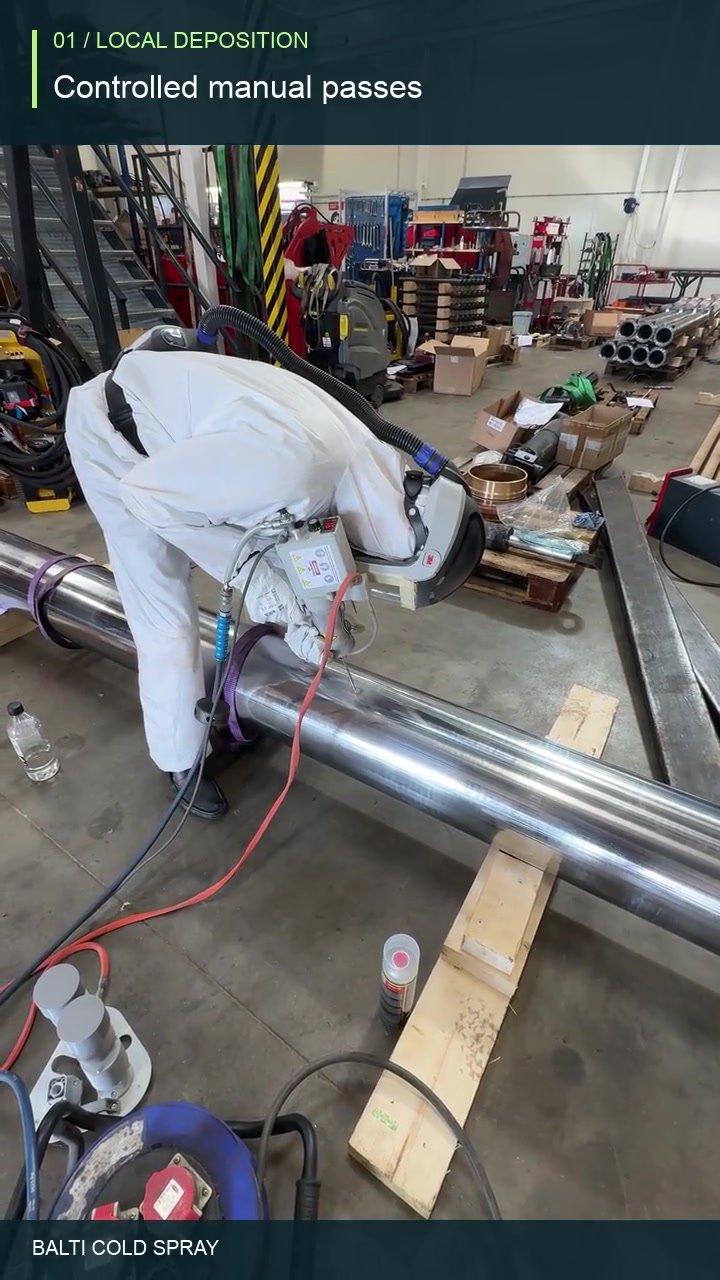
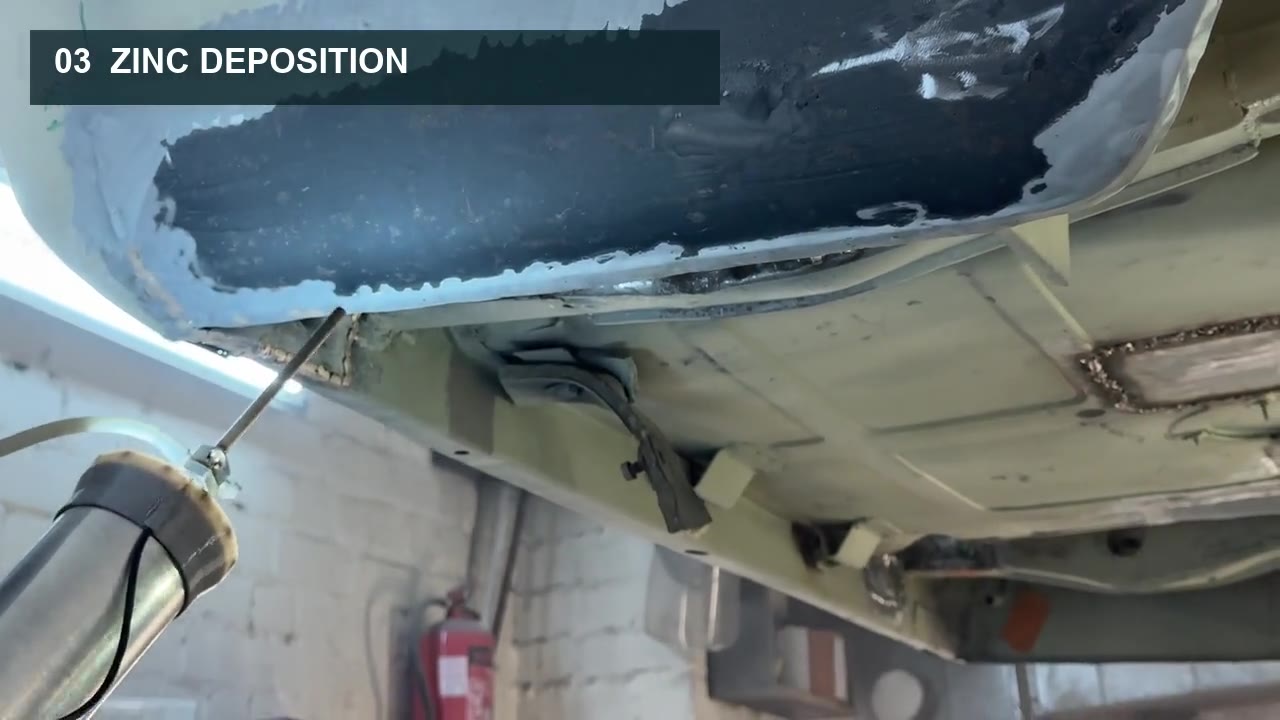
Explore local repair, corrosion protection and functional metallization. Two filmed workshop sequences show the process in practice; the scenario library explains what to test for your own part.

APPLICATIONS IN DETAIL

Find a task like yours.

Explore practical repair and coating scenarios: the component, the process, candidate powders and the result to verify.

The application cards below are scenarios, not completed customer-project claims; the two filmed workshop cases above show actual process footage. The PEEK example is identified separately as preliminary R&D work. Feasibility and performance must be established on your component.

12 applications

MACHINERY & MAINTENANCE01

Worn bearing seats

Application scenario

A bearing seat has lost its specified dimensions while the surrounding component remains serviceable.

Process, powder & checks +

Process to evaluate

Assess local metal build-up, then machine the deposited layer to the required fit.

Target result

Restore a defined diameter and fit without replacing the complete housing.

Powder starting point

K-01-11 / C-01-11
Copper + zinc + aluminium oxide

K-01-11 / C-01-11

What must be verified

Check substrate integrity, bond quality, coating allowance, roundness and final fit. A restored dimension alone does not establish load capacity.

Discuss a similar component
ALUMINIUM COMPONENTS02

Corrosion pits and local material loss

Application scenario

A housing or cover has accessible pitting, scratches or local damage.

Process, powder & checks +

Process to evaluate

Remove unsound material, prepare the surface, trial a compatible aluminium-based layer and finish it.

Target result

Recover a local surface profile or machining allowance.

Powder starting point

K-20-11 / A-20-11
Aluminium + zinc + aluminium oxide

K-20-11 / A-20-11

What must be verified

Confirm the alloy, defect depth, adhesion, porosity and any sealing requirement. Assess through-wall and structural damage separately.

Discuss a similar component
STEEL FABRICATION03

Local corrosion protection

Application scenario

A steel area or weld seam needs a localized protective coating.

Process, powder & checks +

Process to evaluate

Prepare the steel and evaluate a zinc-based layer over the target area.

Target result

Create a continuous local corrosion-protection layer.

Powder starting point

K-00-11 / Z-00-11
Zinc + aluminium oxide

K-00-11 / Z-00-11

What must be verified

Agree thickness and coverage, check adhesion and evaluate corrosion performance in the actual exposure environment.

Discuss a similar component
POWER & ELECTRICAL CONTACTS04

Functional contact surfaces

Application scenario

An electrical contact area needs a conductive surface compatible with its mating component.

Process, powder & checks +

Process to evaluate

Trial a copper- or tin-based layer on representative contact material.

Target result

Improve the surface function required for the selected contact design.

Powder starting point

K-01-01 / C-01-01 or T-25 / T2-00-05
Copper or tin + aluminium oxide

K-01-01 / C-01-01 or T-25 / T2-00-05

What must be verified

Measure contact resistance and temperature rise under the intended load. Check mating pressure, corrosion and wear; do not infer a current rating from the powder name.

Discuss a similar component
ELECTRONICS & JOINING05

A solderable underlayer

Application scenario

A surface is difficult to solder directly, but a functional metal underlayer could provide a connection.

Process, powder & checks +

Process to evaluate

Evaluate a copper-bearing layer, then test the intended solder and flux system.

Target result

Produce a metal surface that can be evaluated for reliable solder attachment.

Powder starting point

K-01-01 / C-01-01 or C-01-00
Copper + aluminium oxide, or copper

K-01-01 / C-01-01 or C-01-00

What must be verified

Check wetting, electrical continuity, pull strength, thermal cycling and the coating-to-substrate bond.

Discuss a similar component
GLASS & FUNCTIONAL SURFACES06

Conductive paths on glass

Application scenario

A glass component needs a localized conductive or solderable area.

Process, powder & checks +

Process to evaluate

Test a compatible metal blend on glass coupons before treating the real geometry.

Target result

Explore electrical functionality on a non-metallic substrate.

Powder starting point

A-20-10 or C-03-10
Aluminium + zinc, or copper + zinc

A-20-10 or C-03-10

What must be verified

Assess glass damage, adhesion, resistance and thermal sensitivity. Geometry, glass composition and surface condition can change the result.

Discuss a similar component
SLIDING BEARINGS07

Babbitt surface restoration

Application scenario

A sliding bearing has local wear or surface defects requiring assessment.

Process, powder & checks +

Process to evaluate

Evaluate babbitt deposition with the appropriate nozzle configuration, followed by finishing to the designed clearance.

Target result

Restore a bearing surface for a qualified repair procedure.

Powder starting point

B-83-100-40
Babbitt blend

B-83-100-40

What must be verified

Identify the bearing alloy and operating load; inspect bonding, clearance, surface finish and lubrication conditions. Compatibility must be established for the complete bearing.

Discuss a similar component
MOULDS & TOOLING08

Local mould shape restoration

Application scenario

A mould has a localized area requiring dimensional build-up.

Process, powder & checks +

Process to evaluate

Trial a suitable blend, build the required allowance and machine or finish the contour.

Target result

Recover a local contour with a coating suited to the intended duty.

Powder starting point

K-714
Nickel + zinc + aluminium oxide

K-714

What must be verified

Verify substrate condition, adhesion, dimensional accuracy, temperature exposure and wear. A listed heat-resistant application is not a universal temperature rating.

Discuss a similar component
ALUMINIUM WHEELS & RIMS09

Cosmetic surface defects

Application scenario

An aluminium wheel has scratches or surface damage within an approved cosmetic repair scope.

Process, powder & checks +

Process to evaluate

Assess an aluminium-based deposit and finish the affected surface.

Target result

Restore the appearance and local surface profile.

Powder starting point

A-1MC or K/A-30-01
Aluminium + aluminium oxide

A-1MC or K/A-30-01

What must be verified

Exclude structural cracks and damage outside the approved repair limits. A cosmetic coating does not establish wheel strength or roadworthiness.

Discuss a similar component
HEAT EXCHANGERS10

Local sealing and restoration trials

Application scenario

A radiator or heat-exchanger area has accessible local metal loss or leakage.

Process, powder & checks +

Process to evaluate

Assess the damage, trial an aluminium/zinc blend and inspect the deposited region.

Target result

Evaluate whether a localized repair can meet an approved acceptance procedure.

Powder starting point

K-20-11 / A-20-11 or K-80-13 / A-80-13
Aluminium + zinc + aluminium oxide

K-20-11 / A-20-11 or K-80-13 / A-80-13

What must be verified

Pressure-retaining parts require engineering approval and specified leak/pressure testing. Reject repairs where the substrate or service conditions cannot be qualified.

Discuss a similar component
CERAMIC SUBSTRATES11

A bond layer for functional metals

Application scenario

A ceramic surface needs a suitable starting layer before copper or nickel deposition.

Process, powder & checks +

Process to evaluate

Evaluate an aluminium-based primer, then build and test the complete coating stack.

Target result

Develop an adherent transition layer for the selected ceramic and top coating.

Powder starting point

K-10-04 / A-10-04
Aluminium + aluminium oxide

K-10-04 / A-10-04

What must be verified

Test the ceramic grade, surface preparation, interlayer adhesion and thermal cycling. Success on one ceramic does not transfer automatically to another.

Discuss a similar component
R&D · PRELIMINARY WORK12

Conductive metal on PEEK

Preliminary R&D result

An engineering-polymer part needs an integrated conductive surface.

Process, powder & checks +

Process to evaluate

Direct metal deposition on PEEK has been explored with an engineered powder and controlled pressure, temperature and stand-off.

Observed in preliminary work

Preliminary work reported conductivity at up to 16 A, soldered wire attachment and a static load test up to 10 kg.

Powder starting point

Application-specific development blend
Composition selected during development

Discuss a development powder

What must be verified

These observations apply to the reported experimental setup, not a product rating. Long-term adhesion, electrical heating, thermal cycling and repeatability still require qualification.

Discuss a similar component

Have a similar part?

Send the material, photographs, defect dimensions and required service conditions. Define an acceptance test before selecting the process.

Discuss your application

YOUR NEXT STEP

Bring us the part. Let’s define the process.

Share the material, required result and operating conditions. A useful recommendation starts with your application.

Discuss your application